tattoo aftercare instructions
CONSULT A PHYSICIAN/DOCTOR/HEALTHCARE PROVIDER AT THE FIRST SIGNS OF INFECTION.Always consult your physician before beginning our aftercare instructions.This general information is not intended to diagnose any medical condition or to replace your healthcare professionals advise.
remove Bandage
Tattoo aftercare starts in the tattoo shop. Once the tattoo is done, the artist will apply a thin layer of tattoo ointment or moisturizer over the entire tattooed area. They will then cover the area completely with plastic wrap or a bandage.
As tempting as it can be to remove the protective cover to look at the tattoo, the bandage or plastic wrap should stay on for at least one hour after the process. The length of time will depend on the size and location of the tattoo.
This covering protects the open skin from bacteria, sunlight, and from rubbing against clothing or any contaminated surfaces. Be cautious when removing any type of bandage because it might have dried plasma, blood, or ink stuck to the bandage.
Saniderm Bandage/Clear Tattoo Membrane Tips: Carefully remove the first bandage around the 8-24 hours period, depending on how much the tattoo weeps and the size/location of the tattoo. Remove the first Saniderm bandage, wash and pad dry the area, and apply a second bandage. Bandages applied after the first can be worn for up to 4 days.
wash tattoo
The first wash...
After usually no less than 5 hours, it is safe to remove the bandage and wash the tattoo.
After thorough hand-washing with any non-fragrance anti-bacterial soap, a person can gently wash the tattoo with hypoallergenic or antibactirial soaps using warm water using their fingers lightly. We do not recommend using bar soaps.
The moisturizer on the skin will come off, and the tattoo may appear as if it is oozing ink or a thick, sticky substance (at times it may appear as its bleeding light thin blood). This reaction is not usually a cause for concern, as it is just the excess fluid and ink from the tattoo process.
After washing, a person should pat dry or air dry the skin with a clean paper towel and allow it to air-dry for up to an hour.
remove Bandage
When the area is completely dry, then you may apply a thin layer of moisturizer to the tattoo, but leave it uncovered to allow the skin to BREATHE. You may repeat the wash and moisturize up to twice a day. We do not recommend using any fragrant or scented lotion. Ask you physician or pharmacist for lotions safe for your skin. Pay attention to allergies you might have to lotions if they contain organic ingredients.
Week 1 of Tattoo
For the first couple of days, the tattooed skin may feel warm to the touch and have a reddish appearance. The colors may also appear very bright against the rest of the skin. The tattoo will become less vibrant as the healing process continues. A person should avoid submerging the tattoo in water or getting the tattoo wet during the first 3–6 weeks, except for when washing it. A person can continue using the washing technique above throughout the first week when needed. How often washing is necessary will vary depending on a person's activity levels and environment. Someone who is sitting in an air-conditioned office all day may only need to wash the tattoo once a day. But someone who is working in a hot or dirty environment and sweating may need to wash the tattoo every few hours. It is best to wash the tattoo with clean fingers only and not a cloth or towel, which may irritate the skin and prematurely remove any scabs that may have formed. Scabs will often form in the first few days, and ink may still come up through the skin and need to be washed away. It is important not to pick the scabs or scratch the skin. Any redness or mild swelling usually goes away near the end of the first week.
Week 2 of tattoo
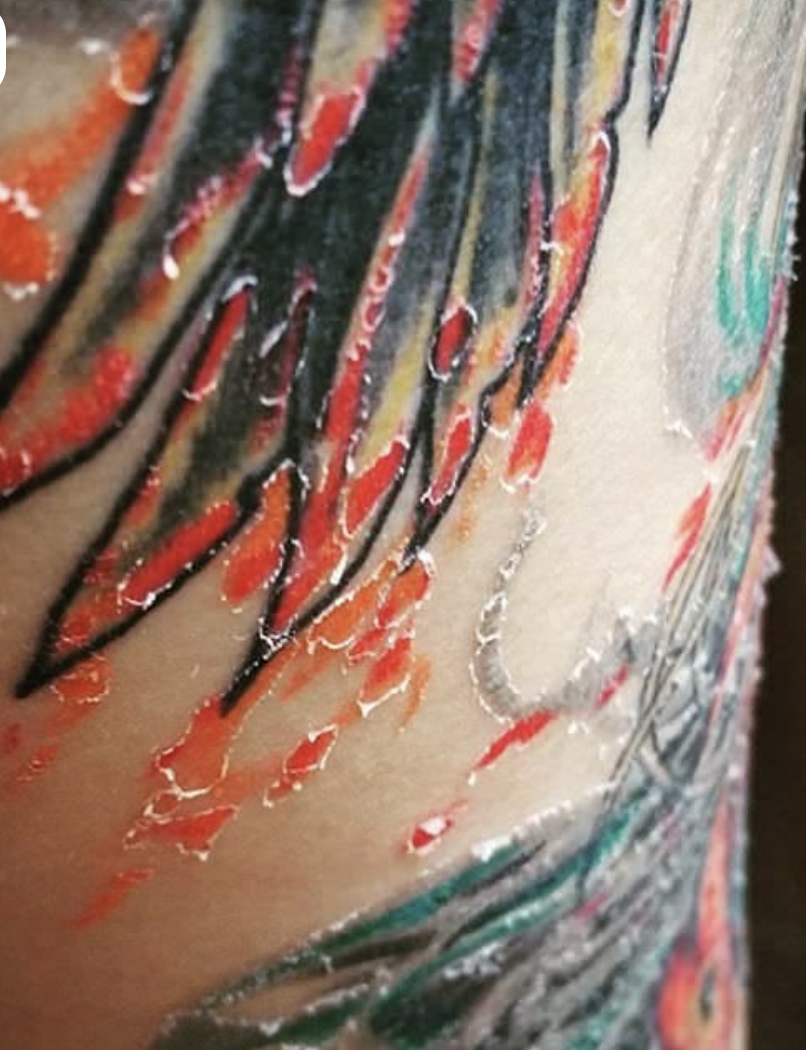
Around the beginning of the second week, the scabs will start to flake off. It is important to be especially gentle with washing and moisturizing during this week, as it is easy to tear away scabs and damage the tattoo. The skin is likely to feel very itchy during this week, but it must not be scratched. Additional moisturizer may help relieve the itch. Using a moisturizer that is kept in the refrigerator may also soothe itchy or irritated skin. If necessary, an over-the-counter product, such as Benadryl, may be taken by mouth to help relieve the itching.
week 3 of tattoo
The final stage of healing can be slow but requires patience. Most of the larger scabs will have flaked and fallen away by now. Small scabs and bits of dead skin may appear, but these will also clear up as the healing process continues. Scabs and flaking skin can cause the area to look dry and dull. Applying moisturizer, and protecting the tattoo from the sun, will help with these issues.
The outer layers of skin should completely heal by the end of week three. The inner layers of skin can take longer to heal but require much less care. The chance of infection is reduced once the outer layers of skin have healed, as there is no open wound for bacteria to infect. Moisturizing regularly in the months following the tattoo will help keep it looking bright and clear. Protecting the tattoo from the sun with clothing while it is healing, and applying sunscreen after it has healed, is especially important in the first few months.
piercing aftercare instructions
1. Wash your hands thoroughly before touching/cleaning your piercing. It is recommended to use (non-fragrance) anti-bacterial liquid soap such as Dial Gold Original (soap bars are never recommended). Do not use regular soaps or hair products on the piercing while in the shower because it may cause irritation or infection.
2. Apply Organic Sterile Saline Solution to a cotton ball until fully damped. You may add a few drops of Tea Tree oil to your solution mix (Tea Tree oil is known to act as an antiseptic solution).
3. Place the soaked cotton ball to the new piercing for five minutes until all dried up lymph (white crust) clears from the fistula (the hole where the jewelry passes through). If some lymph is still not cleared you may let warm water run over the newly piercing until is softens the lymph. It is not recommended to rotate your jewelry if necessary because this may cause regenerating cellular damage to the fistula and it may even be affected by any clinging bacteria from the jewelry.
4. It is preferably to pad dry your new piercing with a paper new paper towel. Regular cloth towels may pull your new jewelry completely out.
1. If needed to touch your oral piercing you have to wash your hands with an anti-bacterial liquid soap thoroughly.
2. Follow normal piercing instructions for any piercings that have an external exit (lip, labret, monroe, etc.)
3. It is recommended to rinse for 1 minute with warm Organic Sea Salt mixed with distilled water 2 times a day (upon awakening and before going to sleep). You may use alcohol-free mouthwash 30 seconds after smoking or eating.
4. Avoid eating spicy or hard food for at least 5 days. Ice cubes may help with the swelling if any, you may take any anti-inflamatory medicine recommended by your physician.
5. Do not over-use mouth rinses if its unnecessary, you may irritate tongue. It is recommended for you to get used to your new piece of jewelry before going back to your normal routine, avoid biting your jewelry. It is possible to chip your teeth by being careless.
Every person heals differently, following proper care of the piercing can improve healing time on any piercing. All initial piercings should be given 6 to 8 weeks to change. Estimate healing times: Ears, Lips, Face, Oral - 3mo; Nose, Cartilage, Others - 6mo. or more.
what to expect
May feel tender, itchy or swollen for a few weeks.
Bleeding after the piercing for a few days may occur.
Some scarring, bumps (hypertrophic scars), depressions or holes may show on skin after you remove the jewelry.
May secrete a whitish-yellow fluid (lymph), which may crust on the jewelry. This discharge may stop at full healing period.
Piercing may swell. Applying an ice pack to the new piercing may help and/or ask you medical physician if any anti-inflammatory such as Ibuprofen is recommended.
Piercing may emit a foul smell through-out the lifetime of the piercing.
Piercing may close within minutes if removed even if it feels like it has fully healed.
May be slightly red. Redness may persist on and off for the entire healing period.
Multiple piercings done in one sitting around the same area may be prone to infections more than normal.
Call us at any of our locations if you have any questions and we will assist you to the best of our ability. If you are not satisfied with our response you may contact your physician.
In Georgia. YOU MAY ALSO CONTACT HEALTH DEPARTMENTS BELOW FOR COMPLAINTS: SUGARLOAF/GWINNETT PUBLIC HEALTH OFFICES LOCATED AT 455 GRAYSON HIGHWAY, SUITE 600, LAWRENCEVILLE, GA 30046 AT PHONE: 866-255-4293 ORCOBB COUNTY PUBLIC HEALTH OFFICES LOCATED AT 1650 County Services Pkwy, Marietta, GA 30008 AT PHONE: (770) 514-2300
Extra Tattoo Care Tips
When the area is completely dry, then you may apply a thin layer of moisturizer to the tattoo, but leave it uncovered to allow the skin to BREATHE. You may repeat the wash and moisturize up to twice a day. We do not recommend using any fragrant or scented lotion. Ask you physician or pharmacist for lotions safe for your skin. Pay attention to allergies you might have to lotions if they contain organic ingredients. A person can also help the healing process by:
Avoiding soaps and moisturizers with any fragrances or harsh chemicals. Even if a product does not normally irritate the skin, it may irritate the tattooed area. Not picking at scabs, as this can cause scar tissue to form. Not scratching the tattoo even if it becomes itchy.
Avoiding non-cosmetic grade petroleum moisturizers, which will clog the pores.
Not using sunscreen on the tattoo until it has fully healed. Not swimming and bathing until the tattoo has healed. DO NOT SCRATCH, you may lightly pad the tattoo with your clean hand or over your cloth if you find your tattoo itching at work/school, etc. You should seek Medical attention at any time you feel the need for it. We are not physicians and therefore never advise against seeking medical treatment or consult.
Infection is the most common reason to see a doctor after a tattoo. If a person does not care for it properly, a tattoo can become infected with bacteria. An infected tattoo will be warm, inflamed, and painful to the touch. The skin may also ooze puss or have a rash.